

User-Generated Content (UGC): How to Get Real Reviews

Introduction:
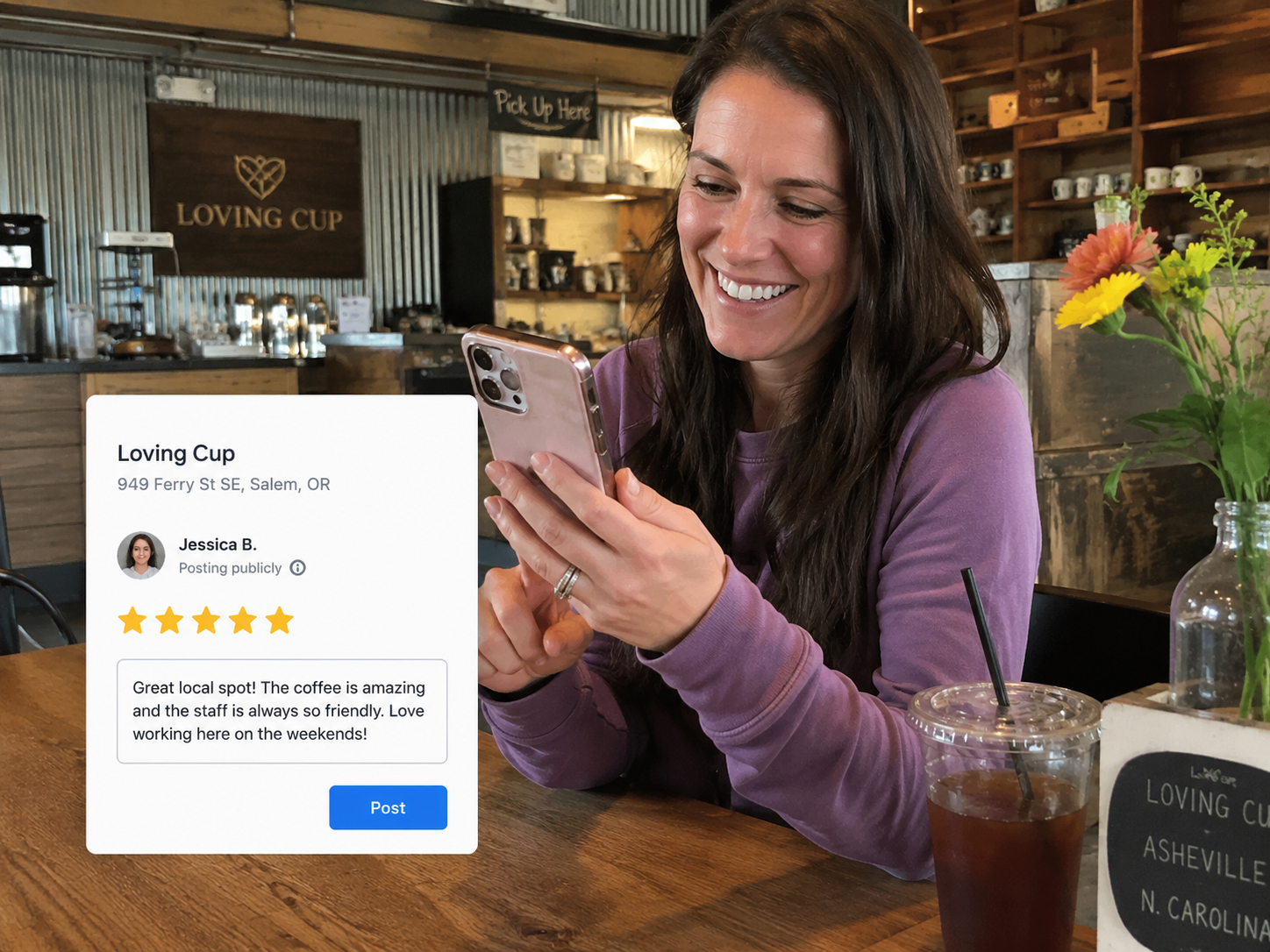
Real customers or users create user-generated content (UGC), which includes reviews, photos, videos, and posts on social media. Brands do not create UGC. UGC is one of the most credible types of social proof available to any company; for example, 79% of consumers report that UGC influences their buying choices (Stackla, 2024). For Salem, Oregon businesses, getting authentic user-generated content is one of the best returns on your marketing investment time.
When you last shopped online, did you look at reviews? Many people do. User-generated content, particularly reviews and user images, affects consumers’ purchasing choices more than any other type of marketing message produced by the company. The reason behind this is very easy: consumers trust other people more than they do companies.
Businesses in Salem, Oregon in hospitality, retail, professional services, and eCommerce all directly benefit from investing in a strong user-generated content strategy. Local eateries with 200 or more Google reviews outshine local businesses with fewer reviews. Businesses that provide service and possess video testimonials convert a higher percentage of website visitors to clients. This guide will reveal precise methods of generating more user-generated content in a way that is authentic, ethical, and consistent.
What Is User-Generated Content and Why Does It Matter?
92% of consumers say they trust user-generated content over ads (Nielsen), and websites with user-generated content generate 29% more conversions than those without (Salesforce, 2024).
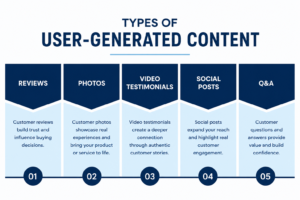
Because user-generated content comes in many formats, it can be used for a variety of marketing purposes:
Written reviews are great for generating local search visibility.
Photos of customer products/services on Instagram – show your products in real life, and are incredibly motivating for customers.
Video Testimonials—offer more than any other format, as they provide the highest level of trust for customers because they’re the hardest to falsify.
- User-generated content creates an authentic level of trust that no other form of copywriting can replicate. A 5-star review from a customer who lives in Salem, OR, holds more value than your own website copy.
- UGC helps SEO directly by adding fresh text to your Google Business Profile for customers searching for local businesses.
- If you use UGC on product pages, bounce rates go down and time on page goes up, so both of those are great signals for search engines to improve your rankings.
Types of User-Generated Content and Where They Work Best
While there are many types of user-generated content with different uses, here’s how each type performs as well as where you should be using them:
| UGC Type | Where It Lives | Trust Impact | Best For |
| Written reviews | Google, Yelp, Trustpilot, Amazon | Very High — purchase-stage trust | Local businesses, eCommerce, professional services |
| Star ratings | Google, Facebook, App Stores | High — fast visual signal | All business types |
| Customer photos | Instagram, Google Photos, product pages | Very High — real-world proof | eCommerce, hospitality, food and beverage |
| Video testimonials | YouTube, TikTok, website embed | Highest — hardest to fabricate | B2B, high-consideration purchases, coaching |
| Social media posts (tagged) | Instagram, Facebook, X/Twitter | Medium–High | DTC brands, events, lifestyle products |
| Community and forum posts | Reddit, Quora, Facebook Groups | Medium — research stage | B2B, tech products, niche services |
| Q&A on product pages | Amazon, eCommerce websites | High — decision-stage signal | eCommerce — supports purchase confidence |
How to Get Real User-Generated Content — 8 Methods That Work
One of the biggest mistakes companies make with user-generated content is waiting until it appears on its own. If you want your happy customers to leave a review, then asking them for one is essential. Here are eight practical ways to do so:
- Ask at the right time. The optimal time to ask for user-generated content is 3-5 days after a purchase or service is completed; send an email/text with a direct link to your Google/Yelp review page. The timing is more critical than anything else regarding completing a review.
- Eliminate friction. With every additional click required for a customer to leave a review, the probability of the customer leaving a review lessens by about 20%, so provide them with a one-click direct link and do not ask them to search for you on their own through Google.
- Engage with existing reviews. Businesses that engage with their reviews have a 49% higher likelihood to receive new user-generated content than those that do not (BrightLocal, 2024). Engaging with reviews signals that you have taken time to read and value what people say.
- Encourage customers to create branded #hastags; ask customers to share photographs using that specific hashtag and share their user-generated content on your website and other social media platforms. By doing this, you are creating a loop in which visibility drives more submissions for your brand.
- Creating a thank-you incentive (a discount or small gift) for honest reviews (instead of paying for a positive review, which is against Google’s policies/FTC guidelines).
- Featuring your existing user-generated content prominently on your homepage, product pages, and social media; seeing others review makes new customers want to too.
- Embedding a review widget on your site (for example, Trustpilot/Elfsight/EmbedSocial) that showcases live user-generated content builds trust among site visitors & increases conversion rate by up to 30%.
- Training employees to ask for reviews in person; this method is considered best when asking at the end of the service (for example, a salon, restaurant, contractor, clinic in Salem, OR). Scripting how you will ask will ensure it is done naturally rather than unprofessionally.
User-Generated Content and SEO — How Reviews Boost Your Rankings
User-generated content serves multiple functions: a trust signal and an SEO asset. Google crawls and indexes text from your reviews; every customer review found online creates new, keyword-relevant content for your search presence, so customer reviews automatically create new content for market search.
- The number of reviews/review ratings is confirmed as a local ranking factor in Google’s local pack algorithm. Businesses that have greater than average numbers of reviews consistently rank higher in Google local maps.
- Fresh user-generated content is a way to show Google that your business is active and current, in the same way that regularly posting blog articles (with new content) does.
- User-generated content on product pages (customer images, questions/answers) lowers bounce rates and increases time on page, both providing positive user experience signals that can help increase positions.
- Using review schema markup on your website makes the star rating visible as rich snippets in search results, increasing click-through rates by 15-30%, on average.
📊 Stat: Businesses with over 200 Google reviews generate twice the revenue of those having fewer reviews (Harvard Business School study), while the average Google Local Pack ranking business has 83 reviews. (Source: BrightLocal Local Consumer Review Survey 2024).
If you are a business in Salem, Oregon, and you want to achieve local pack visibility, getting user-generated content through Google reviews is one of the best things you can do. Obtaining reviews consistently, not through a single push, is the way to keep your business visible. For more information on how local SEO signals work together to increase or decrease website ranking, check out our blog post on How to Fix Website Ranking Drops.
Legal and Ethical Rules for User-Generated Content
Responsibility comes along with collecting user-generated content. If any of the following are done incorrectly, it could lead to removal of reviews, bans from platforms, and fines from the Federal Trade Commission (FTC).
- Do not pay for a positive review. This goes against Google’s terms of service, FTC guidelines, and Yelp’s terms of service. It could lead to a number of penalties from removal of a review to case/civil/penal actions taken against the person who paid for a review to be placed with their company.
- Always disclose any compensation. If you provided any kind of incentive for the user-generated content (even a small discount), that reviewer must disclose that they received an incentive for writing that review. The FTC also requires disclosure for this type of endorsement that includes compensation.
- Obtain permission prior to using any user-generated content. If a user has tagged your business in their Instagram post or left a review on your Google business page, it does not mean that you have permission to repurpose that review in your paid advertisement. You will need to ask for permission, specifically, and get a written reply from that user.
- Handle all negative reviews professionally. Do not delete them; this can raise a red flag and lead to an increase in negative reviews. Stay calm in your response, offer to correct the situation, and move on. A well-crafted response to a negative review can create trust.
- Oregon companies: Oregon state law (ORS Chapter 646) follows the guidelines set forth by the FTC regarding endorsements and testimonials. Disclosures for incentivized user-generated content must be clear and conspicuous.
Conclusion
The use of user-generated content is a cost-effective way to build trust, enhance your online reputation, and contribute positively to your SEO efforts. By consistently encouraging customer reviews, engaging with customers, and obtaining permission for customer-generated content, businesses can build a library of authentic customer experiences that contribute to long-term growth.
Frequently Asked Questions
Q: What is user-generated content (UGC)?
A: User-generated content consists of all of the different types of media created by customers, including reviews, photos, videos, testimonials, and social media posts. When compared to content created by the brand itself, the content created by users is generally seen as more authentic and trustworthy because they are based on real experiences by users.
Q: How can I get more customer reviews?
A: You can ask for customer reviews shortly after they purchase, provide them with a link directly to the review, or use a QR code linked to a review. If you make the submission quick and easy, customers will be much more likely to submit a review.
Q: Is UGC good for SEO?
A: Yes. Reviews left by customers create fresh, keyword-rich content that can improve your local online presence and help you appear in more search results, while also supporting the display of rich snippets and increasing user engagement on your site.
Q: Can I use customer photos or videos in marketing?
A: Unless you have consent from the creator of the content, you may not use their content in ads, on your website, or in any marketing materials. Always obtain permission from the creator of the content first before using it.