

Voice Search SEO: Top Tips for Smart Assistants

Introduction
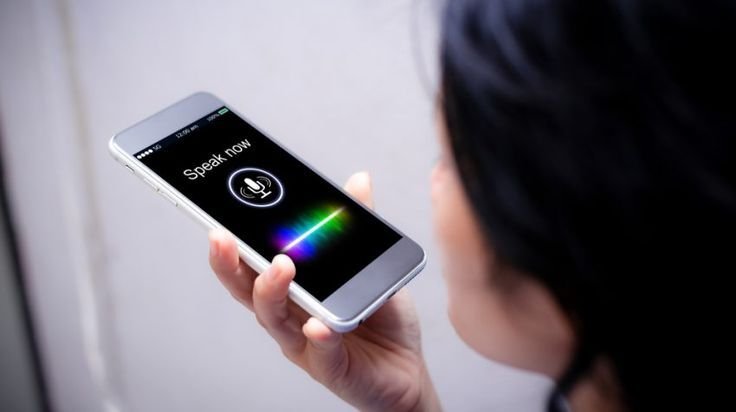
For years, we’ve “spoken robot,” typing clunky fragments like “pizza NYC” into search bars. But in 2026, the era of digital shorthand is over. With 8.4 billion voice assistants active worldwide and 50% of U.S. consumers chatting with devices daily, we’ve shifted from typing to talking.
Today, a hungry traveler asks, “Hey Gemini, where’s the best gluten-free pizza open now near Times Square?” This shift toward natural language is why Voice Search SEO is no longer a bonus—it’s a survival requirement.
If your site can’t handle these conversational voice search queries, you’re invisible to a massive wave of voice search traffic. To stay relevant, you must move beyond old-school keywords and embrace a Voice Search SEO approach that actually sounds human.
Why Your Traditional SEO is Failing?
The truth is, traditional SEO was built for fingers, not vocal cords. Old-school tactics focus on short, choppy “head terms” like “Philadelphia plumber.” But when we use voice search, we don’t talk like robots; we ask, “Who’s a reliable plumber near me with 24-hour service?”
Because voice search queries are longer and more conversational, your content needs a personality shift. To secure a high voice search ranking, your information must be “listenable”—easy for an AI to read aloud without sounding like a textbook.
The reason the old approach is becoming obsolete in Voice Search SEO is this:
- Natural Language vs. Code: Human language is composed of complete sentences, not 2-word phrases.
- Question-Based Intent: Most voice search queries start with Who, What, Where, or How.
- Immediate Answer: Voice assistants need one direct answer, not ten different possibilities.
If you are still using voice search keywords and not focusing on actual solutions to people’s queries, your website will be passed over. In 2026, Voice Search SEO is all about using natural language and rhythm, not just a series of words.
Strategy #1: Target Question-Based “Natural Language”
To get success at Voice Search SEO, one has to stop thinking in terms of keywords and start thinking in terms of conversations. Human language is not just a series of random words; it is a series of complete sentences and questions.
Most voice search queries are answered by following a rule called “5 Ws,” which stands for Who, What, Where, When, and Why.
- Traditional Keyword: “Best dog food.”
- Voice Search Keyword: “What is the best organic dog food for a senior golden retriever?”
Quick Action Tip:
Don’t guess what people are asking. Use tools like AnswerThePublic or Search the “People Also Ask” section in Google. These are goldmines for finding specific voice search keywords that real people are using right now.
By structuring your headers as questions and your text as clear, conversational answers, you’ll turn your Voice Search SEO from a guessing game into a ranking machine.
Strategy #2: Winning “Position Zero” – The Featured Snippet
When it comes to Voice Search SEO, the only position that matters is the number one spot. In a world where Voice Assistants read only one link aloud, the concept of “second place” simply does not exist.
The “29 Word Rule” is the secret to achieving the coveted “Featured Snippet” position. In study after study, the results have consistently revealed that the average voice search results read aloud by Voice Assistants are approximately 29 words in length. In a world where Voice Assistants read aloud only 29 words, the concept of brevity has never been so important.
The Optimization Playbook:
If you wish to achieve the coveted number one position in Voice Search, the Optimization Strategy is as follows:
- The H2 Question: Start by inserting a subheading in the form of a real question (e.g., “How do I improve my voice search ranking?”).
- The Direct Answer: Immediately following the H2 Question, insert a direct answer. Although the Voice Assistant will only read 29 words aloud, it’s best to provide 40-50 words to appease Google’s algorithm.
- The Deep Dive: The remainder of the section should be used to provide the context and details that screen readers will crave.
Strategy #3: Hyper-Local Optimization (The “Near Me” Factor)

Voice Search SEO is the holy grail of local discovery in 2026. If you have a brick-and-mortar business, this is where your bread is buttered. Why? Well, because over 55% of consumers are using voice search to find local businesses!
For example, if a person asks their car, “Where is a 24-hour pharmacy near me?” or “Find a coffee shop with Wi-Fi?” they are not searching for a list of blog posts. They are searching for a place. To get this traffic, your business needs to be the immediate answer.
Here is how you dominate local Voice Search SEO:
- Claim Your Google Business Profile: This is your digital ID card. If your hours, address, or phone number are missing, you won’t show up in voice search results.
- Focus on “Near Me” Intent: Use local landmarks and neighborhood names in your content. If you’re a bakery in Brooklyn, mention you’re “just two blocks from Prospect Park.”
- Keep Info Real-Time: Smart assistants prioritize businesses that are “Open Now.” Keeping your status updated is a massive boost to your voice search ranking.
Without a hyper-local Voice Search SEO strategy, you’re essentially invisible to the millions of people searching for help while they’re already behind the wheel or walking down the street.
Strategy #4: Technical Speed & Schema Markup

But in order to really dominate voice search SEO, you need to look under the hood. Your content speaks to humans, but your code needs to speak to AI. Think of technical SEO as the bridge that allows your smart assistant to come over from the world of “query” to your world of “answer.”
The key to creating an unstoppable Voice Search Optimization strategy is built on two heavy-hitters:
- FAQ Schema – This code essentially “highlights” your question and answer pairs, making it super simple for an assistant to quickly read off your response.
- Speakable Schema – This code is built for text-to-speech and essentially says to your assistant, “Hey, this specific summary is the one you should be reading back to the user.”
However, there’s a catch: speed is a non-negotiable voice search ranking factor. In 2026, the statistics indicate that voice search results load a staggering 52% faster than the average webpage. Why? Because if a person asks a question while driving or cooking, they expect the answer in an instant!
If your site has a slow load time due to heavy images or messy code, voice search engines will ignore you in favor of a competitor with a blazing fast site. To keep your Voice Search SEO at the top, ensure that your mobile experience is fast and has clean structured data. Why? Because a voice search engine cannot suggest something it’s still loading!
Conclusion
The future of the web isn’t something we look at, it’s something we talk to. At its core, Voice Search SEO is about being the most helpful, most accurate, and fastest answer in the room. As AI assistants continue to find their place in our homes and cars, it’s those brands that “speak human” that will attract the lion’s share of voice search traffic. By optimizing for “listenability” and structured data, you’re not just building a brand that appears on a page, you’re creating a voice in someone’s ear.
However, this isn’t a “set it and forget it” scenario. To stay on top of this ever-evolving space, you’re going to need a voice search optimization strategy that continues to improve alongside AI. As voice search goes from simple questions to complex, multi-step conversations, your content needs to be able to keep pace. Ready to learn how to speak the language of 2026? Contact our team today for a custom Voice Search Audit and start capturing the traffic of tomorrow!
FAQ
-
How does voice search SEO differ from traditional SEO?
Traditional SEO targets short, typed fragments like “best pizza NYC.” Voice Search SEO focuses on long-tail, conversational sentences like “Where is the best pizza near me open now?” It prioritizes “listenable” content that AI assistants can easily read aloud.
-
Why are featured snippets important for voice search results?
Smart assistants usually only provide one answer. They pull this directly from “Position Zero” or the featured snippet. If your content isn’t the top snippet, it likely won’t appear in voice search results at all.
-
What are the best tools to find voice search keywords?
Use AnswerThePublic and Google’s “People Also Ask” to find question-based voice search keywords. These tools reveal the specific Who, What, Where, and How phrases real people are speaking into their devices.
-
Does website speed affect my voice search ranking?
Yes. Voice search ranking favors sites that load instantly. Because voice search results load 52% faster than the average webpage, a slow site will be ignored by assistants like Alexa or Siri in favor of faster options.
-
How do I optimize my local business for voice search?
Focus on your Google Business Profile and local Voice Search SEO. Ensure your hours and “near me” information are accurate, as over 55% of consumers use voice to find local businesses for immediate needs.