Social Media Search: How People Find Brands in 2026

Introduction
By 2026. Searching for information about a consumer using traditional methods isn’t enough. You need to consider where the search started. Gen-Z prefers TikTok and Instagram “proof of life” content, like short videos or peer reviews, much more than traditional search engine results. Traditional links lack the proof that new formats provide. This makes each post a place for consumers to explore content. They can also find it on social media platforms. Also, because of the rapid growth in social media, your business relies on optimizing posts for better visibility. Captions, on-screen text, and audio scripts will be indexed by AI to boost your brand’s presence in social media news feeds.
Why Social Media Search is Winning
By 2026, social media will be the main source of online information for a generation who values the “proof” of seeing something in person versus only reading about it through written links. At least 40% of young consumers turn to TikTok or Instagram when searching for local businesses or new merchandise versus using Google. The shift in how Gen Z searches online—compared to the past—is based on wanting to see authentic and unedited content instantaneously versus waiting for a long time as traditional search results provide.

The key to this trend of searching on social media is “visual-first” discovery because most current users would rather view a 15-second video that shows how to practically use a product than read through a 1,000-word written product review. Additionally, most pro-marketeers agree that social media/visual platforms provide the quickest means for creating brand loyalty in 2026 by using innovative means (i.e., sight, sound, motion).
|
Feature |
Traditional Search (Google) | Social Media Search |
|
Primary Media |
Text-heavy articles | Video and Image-heavy content |
|
Trust Signal |
Backlinks & Authority |
UGC (User Generated Content) & Comments |
| User Intent | Information & Navigation |
Inspiration & Social Validation |
| Recency | Months/Years |
Real-time / Last 24 hours |
Social SEO: Optimizing Your Content to Be Found
In 2026 social media search optimization will not be considered a “hack” but a part of how platforms such as TikTok and Instagram index content about you or your brand. These platforms use AI technology to “read” or “listen” to each post (e.g. , picture, video), so your visibility is determined by the metadata you have provided. If you are not optimizing your content for platform indexing then you will essentially be invisible to 74% of Gen Z users who search social media feeds instead of Google to find what they are looking for.
Here Are Three Actionable Fixes for Discoverability by 2026:
- Use Keyword Rich Captions: Stop using “clever” one word captions; Treat your caption like a mini blog post with keywords describing the contents, and including natural search term phrases, within the first two lines.
- Manual Alt Text: Do Not Use Auto-Generated Descriptions; Utilizing the Advanced Settings on your posts manually insert keyword rich Alt Text will allow the algorithms to accurately index your visual items.
- Speech-to-Text SEO; As AI is now capable of “listening” to your video audio and since your Reels/TikToks are hi-ranking videos “keywords” spoken aloud in your video and high-ranking videos have “keyword heavy” hook statements in the first 3 seconds are important signals to the algorithm for ranking your content.
The Rise of “Social-Proof” Shopping
As of the year 2026, high-intent social media searching will be conducted by customers who want an honest opinion about a product or company and not a typical corporate landing page. Customers use social media search bars to find unbiased reviews or compare two companies (using the phrase “[product] vs [competing brand]”). Customer searches include looking at “people like me” in their comment reviews and video reviews because they require social proof in order to make a purchase on a product.

Community Management as Search Signal
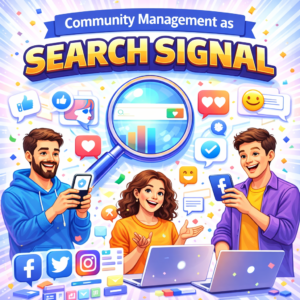
- As a result, community management becomes an important component in developing your social commerce trends strategy. Brands are now being indexed within the search results for various social platforms through the comment section of video and photo posts. Therefore, how quickly and frequently a brand responds in relation to customer comments will affect the brands probability of being found along with its perceived trustworthiness.
- Conversational Search: People now search with natural human phrases and the AI behind each social media platform will “listen” for those keywords you use in your videos as well as for those keywords identified in your community discussion.
- Engagement Bonus: Brands that actively respond to customers’ questions and engage in the “search results” (the comments area) achieve a 25% higher conversion rate than brands that do not engage with their customers.
- Creating a “Living” Review Page: Often, when high-intent shoppers are researching their next purchase, they will view the comment section as a real-time product review page. In order to minimize negativity from a one-time customer experience, your consistent presence within the comment section will help to keep the purchasing momentum flowing.
Technical Components of Social Media Search Visibility
Aiming for a top social rank in 2030 requires taking some steps beyond just ‘good vibes’. Searching for content socially depends heavily on the metadata built into your posts and how they have been optimized for use (in relation to search). This is essential for being able to have your content found when doing searches on social media.
Checklist of items to do towards ranking in social search:

- Use Geo-Tagging; this is especially important for local businesses! By including a geo-tag, you can be found under “near me” searches of social networks. Social media searches that are performed with ‘near me’ have increased 150% over the last 5 years while the mobile updates of Google Maps (i.e., Google’s local directory) have all but ceased.
- Optimize Your Bio: Your “home page” for social SEO is your bio; as such, you should include all major social searches for your niche in your Bio section so that the social media platform knows what you do.
- Post Consistently In Your Niche: Consistent posting within specific niches allows the platform to better understand and assign tags to your posts. If your hashtag strategy for 2030 is specific and repetitive in nature, the AI can better target your content to high-intent users.
- Use On-Screen Text: The AI will look at the text overlay used in videos. It will also boost search ranks of videos in which the keywords have been placed directly onto the screen for at least three seconds.
Search: When the Feed Finds You
The search function no longer involves typing into a search box. Rather, it is now an anticipated task, as social media search has become more about proactively searching than reacting to the search request that has been made. With AI-powered social media, the platforms are anticipating this expectant search behaviour and will use predictive algorithms based on your previous use, such as length of time you paused, rewound or commented, as well as how you left your comment, etc., to provide you with a brand/product that you are about to perform a search for.
This is the power of algorithm-driven discovery. Instead of a search feature that’s user-initiated, the “Discovery” or “For You” tab is more like having your own personal butler. By understanding how social media search algorithms forecast consumer purchasing behavior, brands can win by creating “signal-rich” content, such as videos and posts that trigger the algorithm’s predictive algorithms early on in the consumer’s purchasing process.
- Intent Prediction: AI forecasts shifts in your interests based on cross-platform usage (such as your Threads usage impacting your Instagram Shop feed).
- Behavioral Horizon: The algorithm not only looks at what you liked today but builds a “mental model” of your decision-making behavior to forecast products before you even realize you want them.
Conclusion
In 2026, if your brand is not optimized for social media search, you will be invisible to half of the world’s buyers. To remain relevant and grow, you must change from a “posting” approach to a “search-first” approach. To future-proof your brand discovery, you must be where your customers are looking: in the social feed.
End Scrolling and Begin Converting with AGTC. The world of search has shifted from the browser to the app. Are you ready to lead? At AGTC Services, we are experts in Social SEO Solutions that put your brand first. Contact AGTC today to get a Free Social media Search Audit and let’s get your brand on the map.
you may also like
1. Creating a Social Media Marketing Strategy in 7 Steps
2. How to use Social Media for Business
3. Social Media Branding: Build a Strong Online Presence
4. What is Social Media Advertising?
FAQ
-
What will social media look like in 2026?
Platforms will function as AI-powered search engines and shopping hubs, focusing on immersive AR experiences and niche community “campfires.” The era of passive scrolling is over, replaced by interactive, highly personalized discovery.
-
What is the social media marketing strategy for 2026?
Shift from a “posting” mindset to a “search-first” strategy by optimizing every caption and video for Social SEO. Focus on authentic, community-led content that builds trust through transparency rather than polished corporate ads.
-
What is the 30-30-30 rule for social media?
Allocate 30% to brand storytelling, 30% to community-generated content (UGC), and 30% to engaging, value-driven entertainment. Use the final 10% for real-time interaction to keep your brand responsive and human.
-
What are the trends in social media marketing 2026?
The biggest trends include AI-adaptive UI, hyper-local “near me” social search, and seamless in-app social commerce. Short-form video remains king, but it now functions as a visual “manual” for everything from recipes to tech reviews.
-
How does Gen Z discover brands?
Gen Z uses TikTok and Instagram as their primary search tools, looking for “proof of life” through creator reviews and comment sections. They prioritize brands that show real-world impact and active engagement over traditional Google search results.